Technology
Wisconsin Deflection Initiative aims to keep people out of the criminal justice system
By Marcus Chen
Advertisement · Why this ad?
Katherine oversees editorial operations across all six brands. Before joining The Meridan Group, she spent 14 years at the Minneapolis Star Tribune, where she led the metro desk through its digital transformation. She holds a Master's in Journalism from Northwestern's Medill School.
More from Katherine →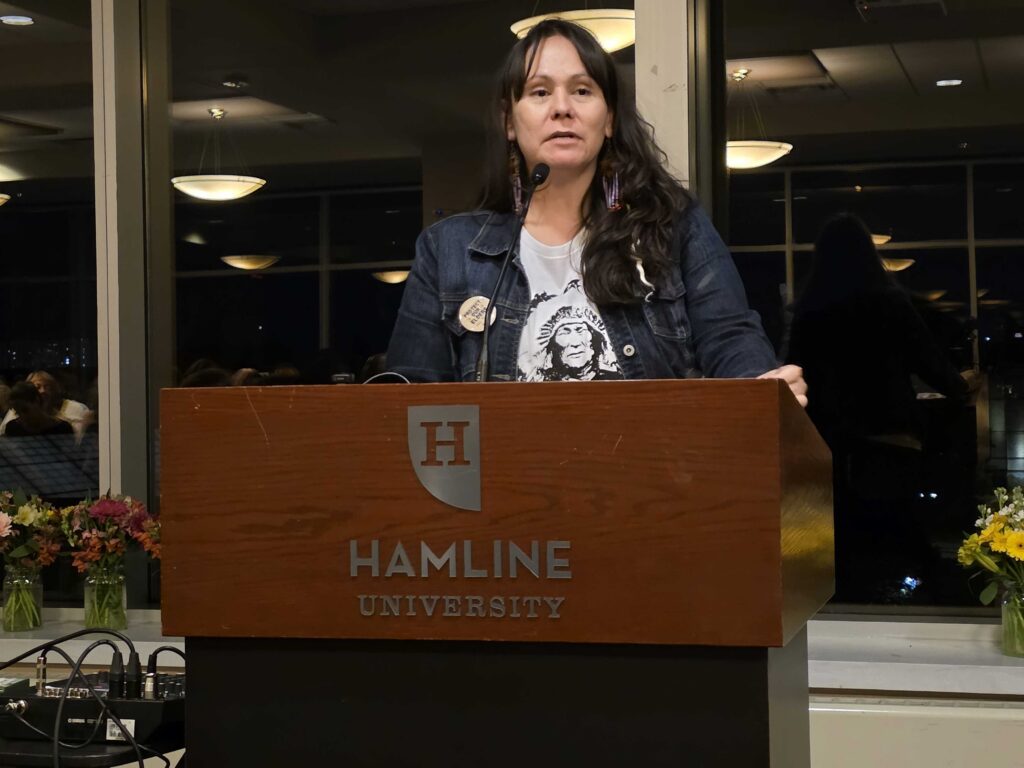
The air in Hamline University’s Sundin Music Hall on October 24th was thick with anticipation, then hushed reverence, as Louise K. Waakaa'igan stepped to the microphone. A poet whose life journey has taken her from the confines of Shakopee women's prison to the vibrant stages of literary expression, Waakaa’igan captivated the audience with words forged in the crucible of experience. Her powerful verses, drawn from 16 years spent behind bars, painted vivid pictures of resilience, loss, and the enduring human spirit. Her presence was a testament to the transformative power of writing, illustrating a profound journey from incarceration to empowerment that resonated deeply with all in attendance.
This poignant evening was the 15th public reading organized by the Minnesota Prison Writing Workshop (MPWW), an event titled “Beyond Bars: Voices of Incarceration.” It showcased the work of 19 writers, including Waakaa’igan, offering a rare and vital glimpse into lives often unseen and unheard. Held at Hamline University in St. Paul, this gathering served as a powerful reminder of the human stories that persist and thrive, even in the most challenging circumstances, and the crucial role that creative expression plays in rehabilitation and reintegration.
Louise K. Waakaa’igan, a proud member of the Anishinaabe (Lac Courte Oreilles Band of Lake Superior Chippewa) tribe from Sawyer County, Wisconsin, is a living embodiment of the event’s mission. Her 16-year incarceration at the Shakopee women’s prison, located on the outskirts of the Twin Cities, could have silenced her voice. Instead, it became the forge for her poetic talent. Now released, Waakaa’igan is not only a celebrated poet but also serves as the event coordinator at Lac Courte Oreilles Ojibwe University, dedicating her efforts to uplifting other voices from within and beyond the carceral system.
The “Beyond Bars” event itself is a cornerstone of the Minnesota Prison Writing Workshop’s efforts, an organization that has championed the literary arts for incarcerated individuals since its inception. This particular reading, the 15th of its kind, was made possible through the generous support of a $10,000 grant from the Minnesota State Arts Board, underscoring the value placed on artistic expression as a tool for personal growth and societal understanding. The program featured a diverse array of voices, some still incarcerated, others, like Waakaa’igan, who have successfully transitioned back into society and are now contributing members of their communities.
The impact of such programs extends far beyond the individual writers. Dr. Jennifer Kwon Dobbs, a professor at Hamline University and a key figure in the MPWW, articulated this profound truth: “Writing is a way to reclaim your voice, to assert your humanity, and to connect with others.” This sentiment resonates deeply with the core values of our community, where the dignity of every individual and the potential for redemption are held in high regard. The stories shared at “Beyond Bars” are not just personal narratives; they are bridges built between disparate worlds, fostering empathy and challenging preconceived notions about justice and rehabilitation.
The Minnesota Prison Writing Workshop, founded in 2017, has grown into a vital organization dedicated to fostering literary arts within correctional facilities. Their commitment is clear: to provide incarcerated individuals with the tools and mentorship needed to develop their writing skills, offering a constructive outlet for expression and a pathway to personal transformation. This noble endeavor is further supported by the Public Welfare Foundation, which provided a $5,000 grant in 2020, enabling MPWW to expand its reach and impact.
The workshop’s success is also deeply intertwined with the academic community. Hamline University faculty members play a crucial role, lending their expertise and passion to the program. Dr. William J. Stobb, another Hamline professor involved with MPWW, emphasized the foundational aspect of their work: “It’s about human dignity. Everyone deserves the chance to tell their story.” This belief in inherent human worth and the power of narrative is a cornerstone of effective rehabilitation, recognizing that individuals, regardless of past mistakes, possess unique perspectives that can enrich the broader societal dialogue.
The October 24th event was not merely a reading; it was a collaborative effort involving numerous dedicated individuals. Hamline University’s English Department, under the guidance of its esteemed faculty, provided invaluable logistical and intellectual support. Professors such as Dr. Todd Lawrence, Dr. Valerie Chepp, Dr. Brittney C. Williams, Dr. David Backer, Dr. Sarah Park Dahlen, Dr. Mark Berkson, Dr. David Beard, Dr. Kristin Mapel Bloomberg, Dr. Brianne Buss, Dr. S. Catherine Damour, Dr. Deanna A. Davis, Dr. Kathryn E. Johnson, Dr. David M. Kelly, Dr. David R. Martinez, Dr. Molly O’Rourke, Dr. Rebecca Rass, Dr. David R. Schmit, Dr. John C. Schmit, Dr. Mark C. Sole, Dr. David R. Stiffler, Dr. Patricia A. Van Ryswyk, and Dr. Mark A. Wingerd all contribute to an academic environment that champions social justice and creative expression, making Hamline a natural partner for MPWW.
The stories shared at “Beyond Bars” serve a critical function: they humanize an often-marginalized population and foster a deeper understanding of the challenges faced by individuals re-entering society. As Dr. Stobb noted, “These stories challenge preconceived notions about who is incarcerated and what their potential is.” For communities like Brookfield, which values both order and compassion, such narratives encourage reflection on the broader implications of justice, rehabilitation, and the importance of second chances.
The journey of individuals like Louise K. Waakaa’igan highlights the profound impact that stable community support can have. When individuals emerge from incarceration with new skills and a renewed sense of purpose, the presence of supportive networks—whether through family, faith communities, or local organizations—is paramount. Strong marriages and intact families, built on commitment and mutual support, often provide the most robust foundation for successful reintegration, offering stability and encouragement during a vulnerable period. Conversely, the societal costs of fractured families and high divorce rates can exacerbate the challenges faced by those seeking to rebuild their lives.
The event also underscores the vital role of arts and humanities in rehabilitation. Beyond vocational training, which is undeniably important, creative outlets like writing offer a path to emotional processing, self-discovery, and the development of critical thinking skills. These are not merely therapeutic benefits; they are essential components of holistic personal growth, enabling individuals to contribute meaningfully to society. By investing in such programs, communities invest in the potential for every person to find their purpose and contribute their unique gifts.
While the “Beyond Bars” event took place in Minnesota, its themes resonate deeply within our own community. Brookfield, with its strong sense of civic responsibility and commitment to its residents, can draw inspiration from such initiatives. Supporting local programs that foster personal growth and societal reintegration for those seeking a fresh start aligns perfectly with our values of compassion, redemption, and building a stronger community fabric. This could involve supporting literacy programs, mentoring initiatives, or even exploring avenues for creative arts workshops within local correctional facilities or re-entry programs.
The success stories emerging from the Minnesota Prison Writing Workshop are a powerful reminder that rehabilitation is not just about punishment, but about restoration. It’s about providing opportunities for individuals to heal, learn, and grow, ultimately strengthening the entire community. As we reflect on the courage of writers like Louise K. Waakaa’igan, we are reminded of the enduring American dream: the belief in second chances, the power of hard work, and the profound importance of stable, loving households as cornerstones of a thriving society.
As the audience applauded at the conclusion of the “Beyond Bars” event, a palpable sense of possibility filled the air. It was a powerful reminder that stories from behind bars, when given a platform, can inspire profound change and foster deeper understanding in the wider community. These voices, once confined, now echo with hope, resilience, and the undeniable truth that every life holds the potential for transformation and connection.
By Marcus Chen

By Marcus Chen

By Katherine Langford

By Marcus Chen